
What is mindfulness?
Mindfulness is the process of learning how to be fully present and engaged in the moment, aware of your thoughts and feelings without distraction or judgment.
What are the benefits of mindfulness?
Mindfulness practice has been shown to reduce depression and anxiety, improves sleep and our ability to focus. It also aids in relieving stress, lowering blood pressure and can reduce chronic pain. Benefits include:
- Increased happiness
- Increased patience
- Increased acceptance
- Increased compassion
- Decreased stress
- Decreased frustration
- Decreased sadness
What is meditation?
Meditation involves training the body and mind to be aware and acknowledge thoughts and feelings, observing them without judgement, and ultimately letting them pass on.
Mindfulness meditation practice
One of the most powerful ways to practice mindfulness is through mindfulness meditation. Studies show that 8 weeks of mindfulness meditation rewires our brains towards more positive thoughts and emotions. Press play below to follow our guided meditation (about 8 minutes).
Prefer to open it on its own? Try our guided meditation practice here.
5 meditation techniques that help cultivate mindfulness
- Reflection: Ask yourself a question, “What are you most grateful for?”. Be aware of the feelings, not the thoughts, that arise when you focus on the question.
- Focused Attention: This technique uses the breath to anchor the mind and maintain awareness. Focus your attention on the breath — specifically the rise and fall of the chest — and return to the breath whenever you get distracted or notice your mind starting to wander.
- Body Scan: This technique uses meditation to connect with the body. It involves scanning your body from head to toe and being aware of any discomfort, sensations, or aches that exist.
- Visualisation: This technique uses visualisation, to focus on a person or something more abstract, to hold attention. The idea here is that the familiar image will help create and maintain a relaxed focus.
- Resting Awareness: Rather than focusing on the breath or a visualisation, this technique involves letting the mind rest; thoughts may enter, but instead of distracting you and pulling you away from the present moment, they simply leave.
Three tips for beginners
1. Consistency is key
Try scheduling meditation sessions like an exercise class or appointment. You can even add it onto an existing routine, such as every time you shower or brush your teeth.
2. Be prepared for noisy distractions
You don’t need a perfectly quiet environment to meditate. Rather than becoming frustrated and focusing on the noise, notice your thought, let it go, and return to your breath.
3. There’s no right way to meditate
Everyone has trouble meditating at first. It also doesn’t matter when or where you meditate - meditation can be done first thing in the morning before your day begins or at night in bed. You can meditate before your last work meeting or after school drop-off.
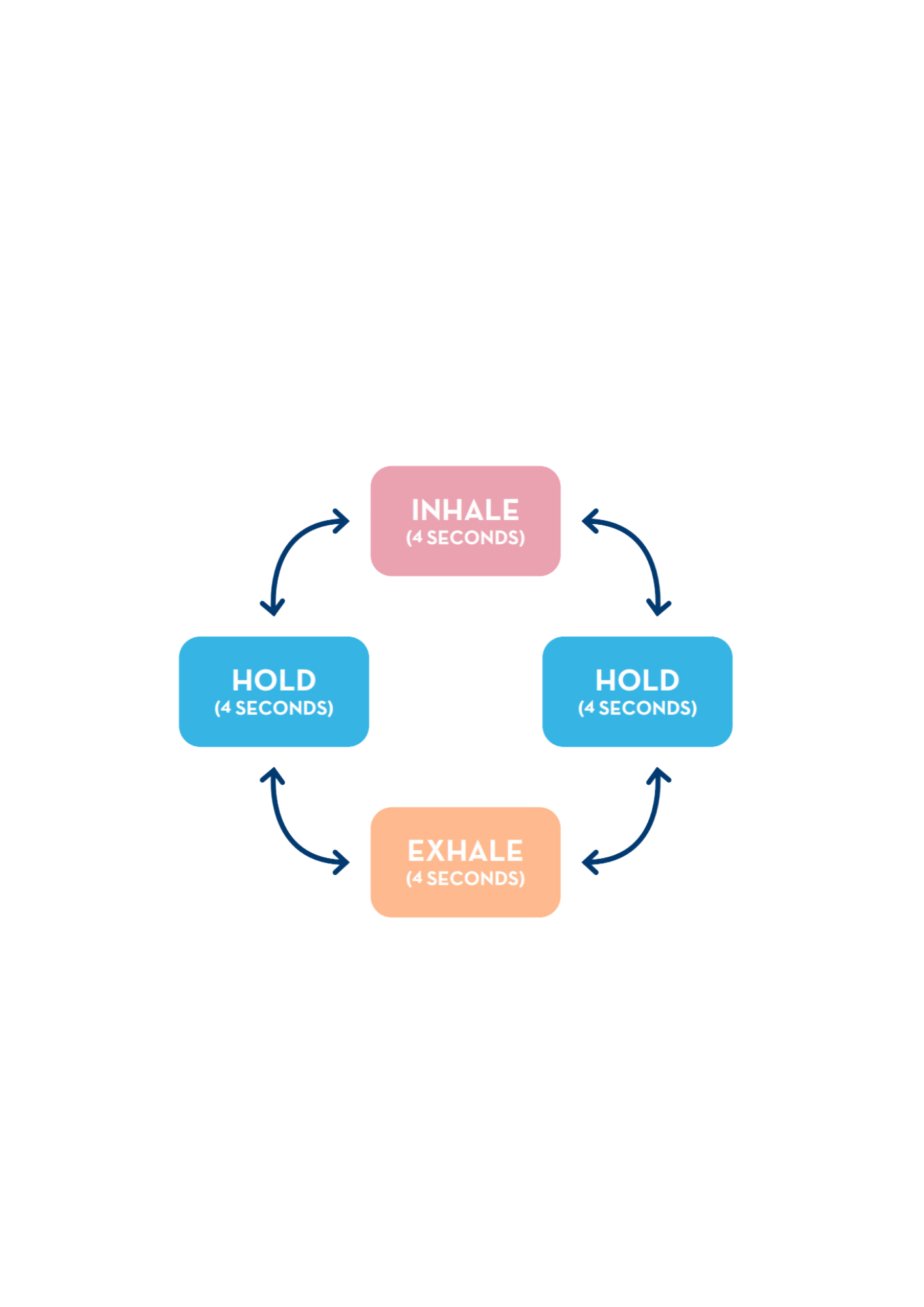
Try box breathing
This technique will help you focus on releasing the tension you’re holding within your body.
Get started: Breathe in four 4 counts, hold for 4 counts, breathe out for 4 counts, hold for 4 counts. Repeat 6-8 times.