

What is a circadian rhythm?
A circadian rhythm is your body’s natural, internal clock that regulates the 24-hour cycle of biological processes, including sleep-wake patterns, hormone release, and body temperature. It is primarily driven by light exposure and helps sync your physical and mental functions with the Earth's day-night cycle.
Why is it important?
A healthy circadian rhythm can help
- Improve energy during the day
- Support focus and concentration
- Improve sleep quality
- Support mood, metabolism and recovery
How to Support your Circadian Rhythm
1. Get morning light
Light is one of the strongest signals for your body clock.
Try this
- Step outside within an hour of waking
- Open blinds first thing
- Take your morning coffee outdoors
- Walk to work or around the block
Even 5–10 minutes of natural light can help your body feel more awake.
2. Keep your sleep times consistent
Your body likes rhythm.
Try this
- Wake up at a similar time each day
- Keep bedtime within a regular window
- Avoid long weekend sleep-ins where possible
- Create a simple wind-down routine
Consistency helps train your body when to feel sleepy and when to feel alert.
3. Time your caffeine wisely
Caffeine can stay in your system for hours.
Try this
- Have caffeine earlier in the day
- Avoid coffee or energy drinks late afternoon (after 2:00pm)
- Switch to herbal tea or water after lunch
- Notice how caffeine affects your sleep
A small timing shift can make a big difference.
4. Dim the lights at night
Bright light in the evening can confuse your body clock.
Try this
- Lower lights 60 minutes before bed
- Reduce screen brightness
- Avoid work emails late at night
- Choose calming activities before sleep
Night-time is your body’s cue to slow down.
What happens while you sleep?
While you sleep, your brain and body move through a series of sleep cycles, each lasting around 90 minutes. A typical night includes 4–6 sleep cycles, depending on how long you sleep. Each cycle includes different stages of sleep, all with an important role:
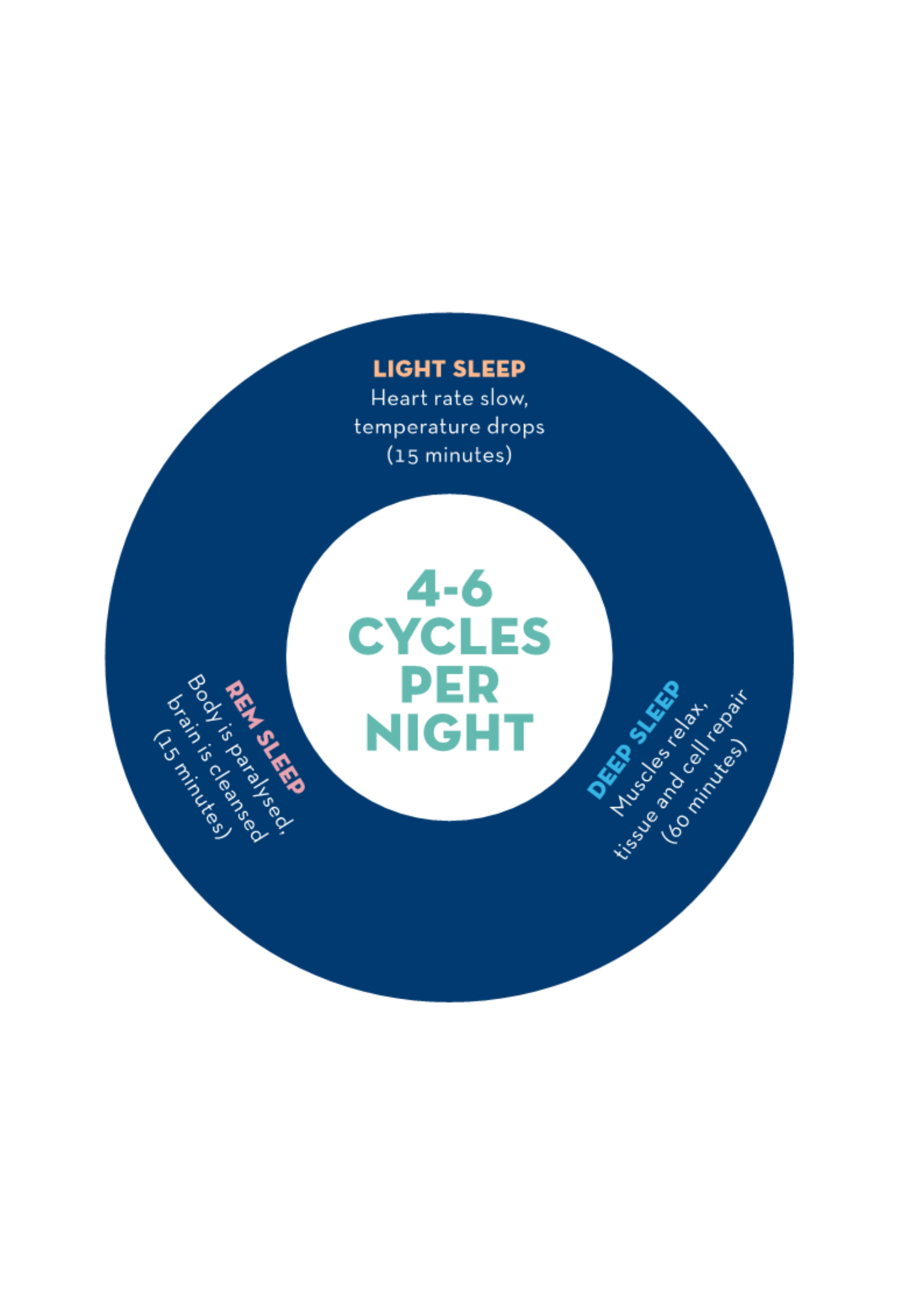
- Light sleep: Your body begins to relax as your heart rate and breathing slow down. This stage helps you transition into deeper sleep.
- Deep sleep: This is your body's recovery stage. Muscles repair, tissues grow, your immune system is strengthened and physical energy is restored.
- REM (Rapid Eye Movement) sleep: This is when most dreaming occurs. REM sleep helps with learning, memory, emotional processing and creativity.
Every stage matters. Missing out on sleep, or regularly cutting it short, can reduce the amount of deep and REM sleep your body receives.
Did you know?
Sleeping for around 7–9 hours each night gives most adults enough time to complete 4–6 full sleep cycles.
That's why waking after only 5–6 hours can leave you feeling tired, even if you fell asleep quickly. Your body may not have had enough time to complete the restorative stages of sleep.
Support your body clock for better sleep
- Morning light
- Regular wake time
- Movement during the day
- Earlier caffeine cut-off
- Dim lights before bed
Small cues repeated daily help your body find its rhythm.